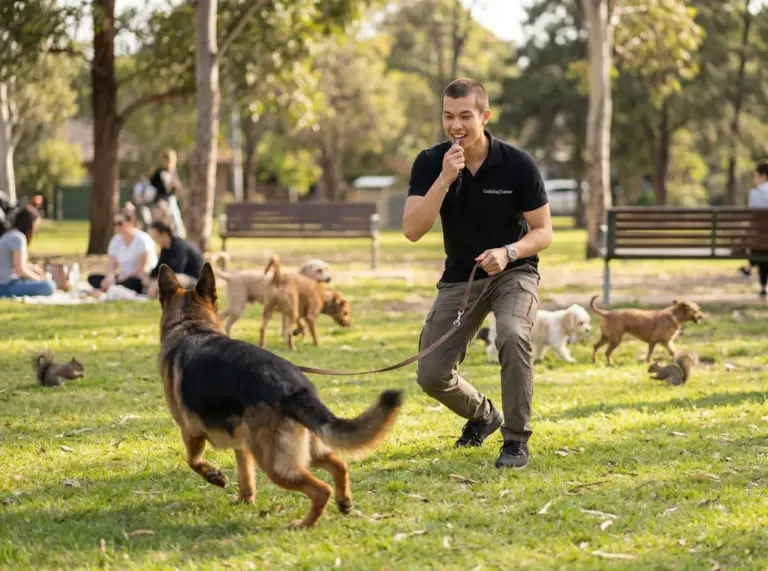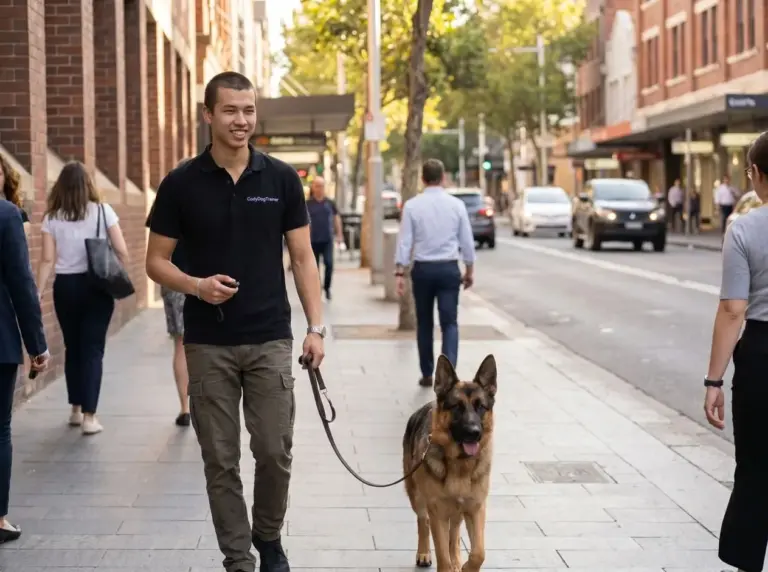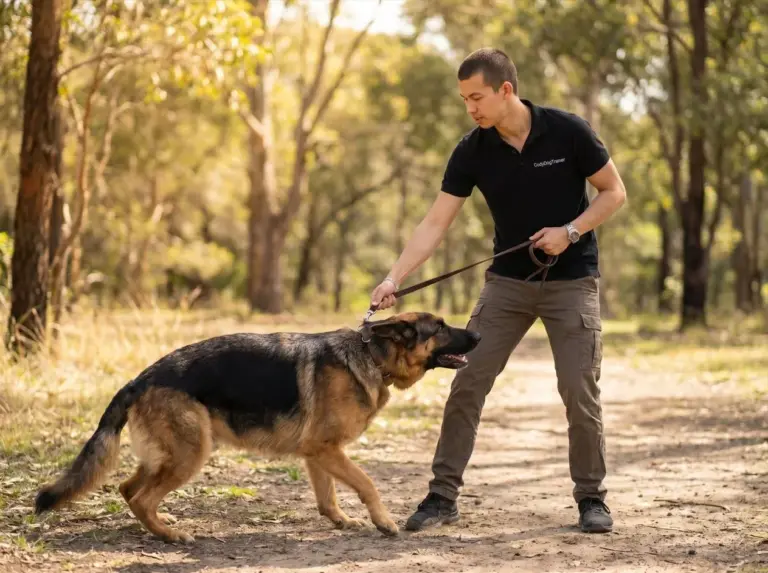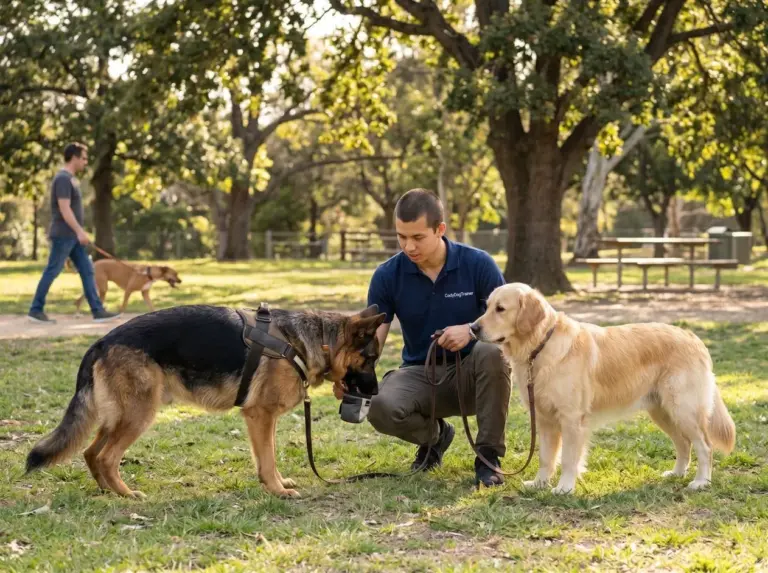
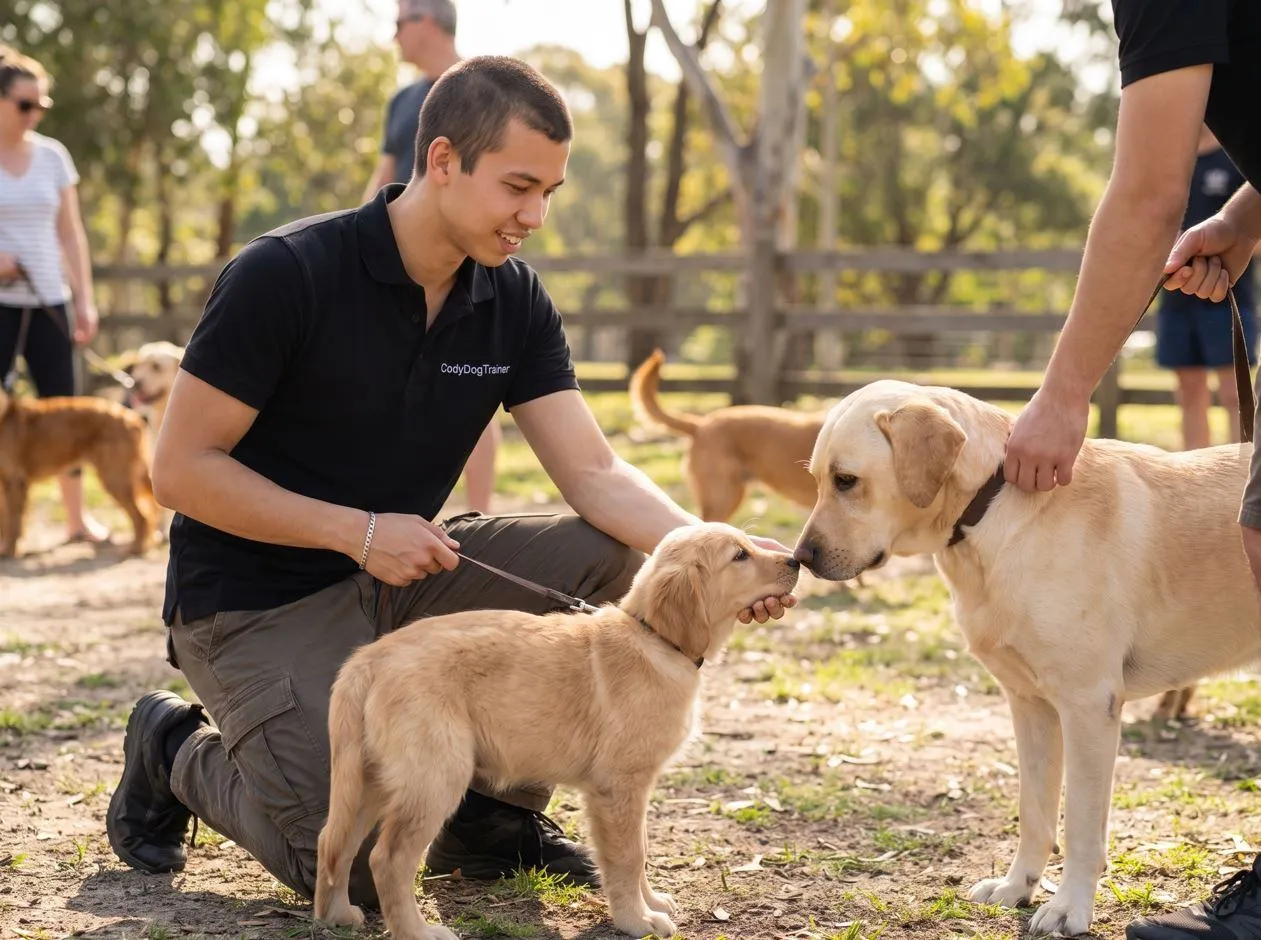
Dog Socialization Guide: How to Socialize Puppies and Adult Dogs Successfully
The Neutrality Threshold Blueprint: Why Everything You Know About Dog Socialization Is Outdated
If you want the short answer, here it is: good socialization is not teaching a dog to love everyone and everything. It’s teaching a dog to stay calm, curious, and indifferent enough to function safely in the real world.
The pages I see most often miss the part that actually matters: threshold. They either turn socialization into a checklist of random exposures, or they treat it like a race to get the puppy “used to” people, dogs, noise, and touch as fast as possible. That’s how you end up with a dog that looks fine in theory and falls apart the second the environment gets real. What I’m giving you here is the version I use in actual sessions: how I balance biosecurity with behavior, how I read the puppy brain versus the adult brain, and how I build calm exposure without flooding the dog.
This page covers the full range, from “I just brought my puppy home” to “I tried everything and now my dog growls at guests.”
The Biosecurity Paradox: How do I protect my puppy from disease without ruining socialization?
You protect both by giving the puppy exposure to the world without giving the puppy access to contaminated ground or unknown dogs.
This is the first place people get stuck, because they think the choice is either total quarantine or full public access. It isn’t. The American Veterinary Society of Animal Behavior has said that behavioral issues, not infectious diseases, are the number one cause of death for dogs under 3 years of age. That doesn’t mean disease risk doesn’t matter. It does mean that if you choose total isolation out of fear, you may be trading one real risk for another one that lasts for the dog’s whole life.
The 16-week pathogen myth
The myth is that if your puppy can’t touch the world before a certain date, you’ve failed. I don’t buy that. What I do believe is that the early weeks matter enough that you should be intentional, not passive. If your vet tells you to avoid high-risk ground contact until vaccinations are complete, I respect that. I tell clients the same thing when the local parvo risk is high or when the puppy is from a background where we don’t know much about exposure history.
But “don’t walk on contaminated surfaces” is not the same as “don’t socialize.” A puppy can hear traffic, watch strangers, smell the bakery, ride in a car, sit in a stroller, observe a bike lane, and hear kids laughing from a safe distance. That still counts. In my experience, the owners who do best are the ones who stop thinking in terms of “outside = walk” and start thinking in terms of “outside = information.”
That is the whole idea behind what I call paws-off-the-ground socialization.
Calculating the risk-benefit matrix in urban environments
Urban life changes the math. If you live in an apartment building, near busy sidewalks, or in a neighborhood with lots of dog traffic, your puppy is already being exposed to a huge amount of sensory input. The question is whether that input is controlled or chaotic.
Here’s how I think about it with a client:
- Low disease risk, high behavior value: being carried past a coffee shop, sitting in a parked car near a school pickup line, watching people from a distance.
- Moderate disease risk, moderate behavior value: brief, carefully chosen curbside exposure where the puppy never touches unknown ground.
- High disease risk, low training value: dog parks, random sidewalk greetings, shared water bowls, and any place where the puppy is likely to be rushed by unknown dogs.
I’m not trying to make owners paranoid. I’m trying to stop them from wasting the early window on the wrong kind of exposure. A puppy that is carried around the world but never forced into it can still build confidence. A puppy that is dragged through the world before it’s ready can build fear fast.
Paws-off-the-ground socialization: strollers, slings, and elevated blankets
This is one of the most useful tools for introverted owners, city dwellers, and people with a vet who wants strict surface caution. I use strollers, wagons, slings, and even a folded blanket on a bench or tailgate so the puppy can observe without contact.
What I’m looking for is not excitement. I’m looking for neutrality. If the puppy can sit, look, sniff the air, and then settle, that’s a win. If the puppy is barking, spinning, or trying to launch out of the stroller, the session is too hard.
For a practical step-by-step routine, I often pair this with my loose leash walking techniques for daily urban sidewalk commutes once the puppy is actually old enough and cleared for safer ground exposure. Before that, I keep the work elevated and controlled.
What I tell nervous owners
If you’re worried you’re “missing” socialization because your puppy isn’t touching everything, relax. The puppy doesn’t need a free-for-all. It needs repeated, calm, low-pressure contact with the world. That can happen from a stroller just as well as it can happen from the ground, and sometimes better.
How does canine brain development dictate the critical socialization window?
The socialization window matters because the puppy brain is built to absorb the world early, then become more selective later.
People love fixed dates because they feel clean and certain. Real development is messier than that. The puppy doesn’t wake up on day 84 and suddenly become a different species. But there is a biological shift happening during those early weeks, and if you miss the chance to shape the puppy’s baseline, you feel it later.
In developmental research, including the classic work of Scott and Fuller, the early weeks are a period of high plasticity. The puppy is more open to novelty, more exploratory, and less likely to treat the unfamiliar as dangerous. Later, the brain becomes more efficient and more conservative. That shift is useful for survival, but it also means unfamiliar things can start to register as suspicious instead of interesting.
The primary integration window: structural plasticity
During the early window, I want puppies to learn that novelty is ordinary. Different people, surfaces, sounds, handling styles, vehicles, hats, wheelchairs, children, men with beards, women with umbrellas, and loud deliveries should all be part of the normal landscape.
This doesn’t mean every exposure has to be direct or intense. It means the puppy’s nervous system should get repeated, low-stress samples of the world while it is still highly adaptable. If I had to compress the principle into one sentence, it would be this: early socialization is less about “meeting” things and more about “noticing” them without alarm.
Synaptic pruning and neural myelination: why fear gets sticky later
The best way I can explain this to clients is with the brain’s own efficiency process. As puppies mature, the brain strengthens some pathways and trims others. That’s normal. It helps the dog become faster, more predictable, and less mentally scattered. But it also means repeated fear can become a well-worn path.
Once a dog starts rehearsing suspicion, avoidance, barking, or defensive behavior, those patterns become easier to trigger again. That’s why a puppy that was a little unsure at 10 weeks can become a dog that barks at strangers at 10 months if the early uncertainty keeps getting reinforced.
I’ve seen this especially in puppies that were kept “safe” by being underexposed. The owners meant well. They just accidentally taught the dog that the world was rare, novel, and potentially dangerous.
Breed-specific timelines: herding vigilance vs. retriever sociability
Breed matters, but not in a simplistic way. A retriever may be naturally more open to strangers than a guardian breed. A herding dog may be more environmentally aware and more likely to track movement. A Cane Corso, Great Pyrenees, or similar guardian-type dog may default to watchfulness before friendliness. That doesn’t mean the dog is broken. It means your training goals should be different.
With a guardian breed, I’m often not trying to create giddy friendliness. I’m trying to create calm neutrality. With a softer retriever, I may need to prevent over-arousal and “everyone is my best friend” behavior that later turns into jumping, whining, and leash chaos.
If you have a dog that pulls hard because the environment is too exciting, I’d pair this section with my leash pulling correction methods for large breed target dogs. Socialization and leash manners are connected more often than people realize.
Is 16 weeks too late?
No. It’s later than I’d prefer, but it is not too late. That’s a big difference. I’ve worked with plenty of dogs who missed the early window and still made major progress with a structured plan. What changes is the method. You stop thinking in terms of “imprint everything now” and start thinking in terms of gradual behavior modification.
That’s where a lot of owners panic. They hear “critical window” and assume the door slammed shut forever. It didn’t. It just got harder, slower, and more dependent on careful repetition.
Why are “friendly” dogs often the ones that become reactive?
Because friendliness is not the same thing as stability.
This is one of the most misunderstood parts of socialization. A dog that wants to greet every person and every dog is not automatically well socialized. In fact, that dog may be under-trained, over-aroused, or both. Real socialization produces a dog that can notice the world without needing to interact with it.
I call that environmental indifference. The dog sees the trigger, registers it, and keeps moving. That’s the goal.
The reactivity loop: how hyper-sociability creates leash frustration
When a puppy is allowed to greet everything, the puppy learns that other dogs and people are rewards on demand. Later, when the leash says “no,” the dog feels blocked. That blockage creates frustration, and frustration turns into barking, lunging, spinning, or whining.
I see this all the time in dogs that were described as “super social” as puppies. What the owner really means is that the dog was never taught to disengage. So now the dog is not calm around others; the dog is obsessed with access to others.
That’s not social confidence. That’s barrier frustration.
Erving Goffman’s civil inattention, translated for dogs
Humans already know how to do this. In crowded public spaces, we often acknowledge each other without staring, touching, or demanding interaction. That’s civil inattention. Dogs need a version of that skill too.
In practice, I want the dog to learn: “People exist. Dogs exist. I do not need to greet them.” That’s why I spend so much time rewarding the dog for looking and then looking away. The dog learns that the environment can be present without becoming the center of the dog’s world.
The on-leash greeting ban
I’m blunt about this with clients: on-leash greetings are a bad default for most dogs. They remove escape options, compress space, and create pressure. That pressure is exactly what makes many dogs snap, freeze, or explode.
There are exceptions, of course. But if you’re building socialization from scratch, I would rather see 20 calm pass-bys than one rushed greeting that goes sideways.
If your dog is already reactive in public spaces, I’d rather you work through a structured plan than keep “testing” the dog in parks. For that stage, my how to socialize aggressive adult dogs at public parks guide goes deeper into safe distance, setup, and management.
What do I do when strangers want to pet my nervous dog?
You do not let strangers reach for a nervous dog just because they brought treats.
This is where a lot of well-meaning advice goes wrong. People think food can override fear if the treat is good enough. In practice, that often creates a threat-reward conflict. The dog wants the food, but the dog also feels unsafe. That internal conflict can push the dog too close to the trigger and make a bite more likely.
The threat-reward conflict interface
Here’s what I watch for: the dog leans in for the food, takes it, then immediately stiffens, backs off, or snaps. That’s not the dog being “mean.” That’s the dog realizing, a second too late, that the reward required too much proximity.
I do not ask strangers to feed fearful dogs from their hand. I ask them to toss food away from themselves so the dog can benefit from the reward while also moving away from the pressure source. That simple spatial change matters more than people think.
Spatial decompression tossing
When I’m working with a nervous dog, I’d rather the stranger toss a treat behind the dog or to the side than hold a hand out like a lure. The dog gets to choose distance. That choice lowers pressure.
This is especially important with adult dogs that already have a history of growling or snapping. If you force the dog into a close-contact greeting and hope the treat saves it, you’re gambling with the dog’s threshold.
For dogs that need more formal pattern work around people, I often use the same calm-focus principles I teach in how to train emergency recall in high distraction environments. The skill is different, but the principle is the same: teach the dog to orient to you before the environment overwhelms them.
What I tell guests to do instead
I tell guests to ignore the dog at first. No reaching. No leaning. No staring. No talking in the dog’s face. Let the dog observe from a distance. If the dog chooses to approach, the guest stays soft and still. If the dog doesn’t approach, that’s fine too.
That’s the part people struggle with. They think a successful greeting means the dog comes over and gets petted. Sometimes the best greeting is the one that never happens.
What is the Neutrality Threshold Bridge, and how do I use it?
The Neutrality Threshold Bridge is the framework I use to move a dog from exposure to calm without pushing the dog into panic.
It has three parts: environmental anchoring, sensory sequencing, and spatial decompression. If you remember nothing else from this page, remember this: the dog must stay under threshold long enough to learn that the trigger is not dangerous.
Phase 1: Environmental anchoring
Environmental anchoring means I place the dog far enough from the trigger that the dog can notice it without reacting. That might be 100 feet from a stranger, 60 feet from a dog, or far enough away from traffic that the sound is present but not dominating the nervous system.
At this stage, I reward the dog for looking and then checking back with me. I’m not asking for perfection. I’m looking for a soft body, normal breathing, and a willingness to orient.
If the dog can’t eat, can’t think, or can’t disengage, I’m too close.
Phase 2: Sensory sequencing
Dogs process the world through a sequence of inputs, and I respect that sequence. I prefer smell before touch, sight before contact, and observation before interaction.
For example, with a visitor, I may start with the dog smelling the visitor’s clothing from a distance, then watching the visitor sit quietly outside, then moving closer only if the dog stays loose and calm. I do not jump straight to petting.
This is where a lot of owners get impatient. They want the dog to “just meet the person.” But if the dog hasn’t had time to process the scent, the movement, and the presence, the meeting is too abrupt.
Phase 3: Spatial decompression
Spatial decompression means the dog always has a way out. The reward should support retreat, not trap the dog in place.
That’s why I like treat tossing, side-door exits, open space, and predictable routes. If the dog can move away after each successful step, the dog learns that proximity is optional. Optionality reduces fear.
This phase is also where I build in safe spaces like crates or beds. For a visitor protocol, I want the dog to understand that it can leave, settle, and come back if it chooses. That’s much healthier than forcing a stay-and-tolerate setup.
How I apply NTB with puppies
With puppies, the work is faster and lighter. I’m using the NTB to prevent fear from getting established. I keep sessions short, upbeat, and low-pressure. A few minutes of calm observation is enough.
That’s especially useful if you’re trying to socialize a puppy in a city and can’t rely on a large social network. You do not need dozens of people entering your home. You need controlled, repeatable exposures in the real world.
How I apply NTB with adult dogs
With adult dogs, the bridge is slower. I may spend days or weeks at one distance before I move closer. That’s normal. If the dog has a fear history, I’m not trying to “win” a greeting. I’m trying to change the dog’s expectation.
That’s one reason I like pairing this with structured home management. A dog that is rehearsing calm in the house will handle public work better than a dog that is already over-aroused before the session even starts.
Can I socialize a dog if I live alone or hate forced interaction?
Yes. You do not need a big social circle to socialize a dog well.
This is a huge gap in most advice. A lot of guides assume you have a house full of relatives, friends, and willing dog-savvy helpers. Plenty of people don’t. Some owners are introverted. Some are isolated. Some simply don’t want strangers touching their dog. That does not disqualify them from doing good work.
The public space as a sensory theater
I tell solitary owners to think like observers, not hosts. A parking lot, sidewalk café edge, hardware store entrance, or quiet bench can become a sensory theater where the dog watches the world from a safe distance.
The dog learns that people move, carts roll, doors open, children shout, and life keeps going. None of that requires a greeting. In fact, for many dogs, the absence of social pressure is what makes the exposure useful.
Distant environmental habituation
For a shy owner, this is often the easiest path to consistency. You can schedule 5 to 10 minute sessions, keep the dog in a stroller or on a blanket, and leave before the dog gets flooded. You do not need to be charismatic. You need to be predictable.
If you’re working on a puppy with a lot of environmental sensitivity, I’d rather see three calm outings a week than one big “socialization day” that overwhelms everyone involved.
Group classes as passive exposure zones
Well-run puppy classes are useful because they create a controlled environment with other dogs and people present, but not chaotic. That said, I only recommend classes that respect threshold, spacing, and clean setup. A crowded free-for-all is not a class; it’s a stress event.
According to a JAVMA study cited in the research brief, structured puppy class attendance increases dog retention in adoptive homes by 14%. That fits what I’ve seen: when owners get a real plan, they stay the course longer.
Not every dog needs direct play in class. Sometimes the best learning happens when the puppy simply exists in the same room and leaves with a good memory.
What does socialization look like when a dog is already afraid?
At that point, you are doing behavior modification, not early imprinting.
This distinction matters because the plan changes. A fearful adult dog does not need a bigger version of puppy socialization. It needs distance, repetition, and emotional safety. If you treat a reactive adult like a blank-slate puppy, you usually make the problem worse.
From “socialization” to reconditioning
When I work with adult dogs, I’m not trying to create instant friendliness. I’m trying to lower the dog’s baseline arousal around the trigger. That can take weeks or months, depending on the history.
The dog may never want strangers to pet it. That’s okay. The real goal is that the dog can remain calm, recover quickly, and function without constant defensive behavior.
What I watch for first
The first signs are often subtle: hard staring, closed mouth, body freeze, tucked tail, lip licking, yawning, head turns, or sudden sniffing that looks more like avoidance than curiosity. If I miss those signs, I’m already behind.
Once the dog crosses threshold, learning drops fast. That’s why I get so strict about distance. A dog can only process what it can survive emotionally.
The 72-hour decompression reset
After a bad outing, I often recommend 72 hours of lower stimulation. That doesn’t mean the dog sits in a dark room. It means no new stressors, no hard training pushes, and no “let’s try again tomorrow at the same busy place.”
I’ve seen too many dogs stack stress on top of stress because the owner kept exposing them before the nervous system had time to settle. If the dog had a rough day, let the body come down first. Then train.
According to the research brief’s cited field data on pandemic puppies, 96.7% of owners of puppies acquired during historical lockdowns reported at least one problem behavior at 21 months, with 30.9% showing separation anxiety. I bring that up because it shows how much early environment matters. Underexposure leaves a long shadow.
How long does remedial work take?
Longer than most people want, shorter than most people fear. I know that sounds vague, but it’s the honest answer. Some dogs shift in a few weeks. Others need months. The more history, the more careful I get.
What matters is not speed. What matters is that the dog keeps making small, stable gains without repeated blowups.
How do I prepare a dog for guests, handling, and vet care without forcing it?
I use cooperative care and touch desensitization so the dog learns that handling predicts control, not panic.
People often socialize to sights and sounds but skip touch. That’s a mistake. A dog that tolerates the sidewalk may still panic at nail trims, ear checks, harnessing, or restraint at the vet. If you want a truly stable dog, body handling has to be part of the plan.
Tactical somatic desensitization
I start with small, predictable touches: shoulder, chest, collar, paws, ears, tail, muzzle, and brief restraint. I keep the pressure light and the repetitions clean. The dog gets rewarded for staying relaxed and for opting back in.
According to the research brief’s cited veterinary desensitization data, 86.7% of dog owners reported a significant reduction in handling fear after a standardized 4-week somatic desensitization program. That matches what I see in practice when the work is done patiently and consistently.
Cooperative care at home
One of the best things you can teach is a stationing behavior: chin rest, mat settle, crate entry, or a stand-still cue. Once the dog understands how to participate, vet-style handling becomes much easier.
I also like to build in short mock exams at home: look at the ears, touch the paws, lift the lip, hold the collar, then release. The release matters. The dog should feel the end of the interaction as clearly as the beginning.
Why crate training helps here
A crate should not be a punishment box. It should be a decompression space. When guests arrive, I want the dog to know that it can go there voluntarily and settle.
If you’re trying to build that skill from scratch, I’d use the same clarity I use in my how to socialize aggressive adult dogs at public parks approach: lower pressure, create distance, and let the dog choose engagement instead of forcing it.
What are the biggest mistakes people make when trying to socialize a dog?
The biggest mistake is confusing exposure with flooding.
People think more is always better. It isn’t. More stress is just more stress. If the dog is overwhelmed, the session teaches fear, not confidence.
What people get wrong about dog parks
Dog parks are not socialization by default. They are uncontrolled group settings with unpredictable dogs, unpredictable people, and a lot of rehearsal for bad habits. For a stable, neutral dog, that may be fine in very limited circumstances. For a fearful puppy or reactive adult, it’s usually the wrong tool.
I’d rather build calm parallel walking, neutral observation, and structured greetings than gamble on a chaotic off-leash environment. If your dog already struggles with arousal, that kind of setting can set you back quickly.
What people get wrong about “friendly” greetings
Another mistake is assuming every stranger interaction has to be a success. It doesn’t. If the dog refuses a greeting, that is information. If the dog needs space, that is information. If the dog prefers to watch from a distance, that is also information.
The dog does not need to become everyone’s favorite. It needs to become stable enough to live in the world without constant conflict.
What people get wrong about timing
Owners also wait too long because they’re afraid of doing it wrong. I understand that fear. But inaction is a choice too. If you keep waiting for the perfect plan, the puppy keeps developing without useful experience.
The answer is not reckless exposure. The answer is better exposure.
FAQs
How do I tell if my dog is overwhelmed?
Look for stiff posture, closed mouth, hard staring, lip licking, yawning, sudden sniffing, or a refusal to take food. A dog that can’t eat or can’t disengage is usually past the point of productive learning. When I see those signs, I increase distance immediately.
Can I socialize my puppy without letting strangers touch them?
Yes, and for many puppies that is the better choice. Socialization is about neutrality and confidence, not collecting pets from strangers. If the puppy can observe people calmly without being handled, that is real progress.
Is 12 weeks really the deadline?
No. It’s an important developmental marker, but not a magical cutoff. Earlier is easier, later is still workable. I’d rather help a 15-week puppy than tell an owner they missed their chance.
Should I let strangers feed my nervous dog treats?
Usually no. Direct hand-feeding can create a threat-reward conflict and push the dog too close to the trigger. I prefer strangers toss treats away from themselves so the dog can gain confidence without pressure.
What if my puppy hasn’t met many dogs yet?
That’s not automatically a problem. The issue is whether your puppy has learned to stay calm around dogs in general. Calm parallel exposure is usually more useful than random play. If you need a structured plan, start there instead of rushing into off-leash greetings.
Does socialization mean my dog should love everyone?
No. A well-socialized dog can ignore people and dogs without distress. That’s the goal I care about most. If your dog is peaceful, neutral, and recoverable, that’s better than a dog that wants to greet every living thing.
How long does it take to help a reactive adult dog?
It depends on the history, the trigger, and how consistent the home setup is. Some dogs improve in a few weeks; others need months of careful work. I judge progress by lower arousal, faster recovery, and fewer rehearsed reactions.
Can I use a stroller or wagon for socialization?
Absolutely. For young puppies and biosecurity-conscious homes, it’s one of the best tools available. It lets the dog hear, see, and smell the world without touching contaminated ground. I use it often in city environments.
What should I do after a bad socialization outing?
Give the dog time to decompress. I like 72 hours of reduced stimulation after a major stress event. Keep the environment quiet, predictable, and low-pressure so the nervous system can settle before the next training step.
Are puppy classes worth it?
Yes, if they’re well run. A good class gives the puppy controlled exposure to dogs, people, handling, and new environments. A chaotic class can do the opposite, so I’m picky about the format and the instructor.
Where to Start Tonight
The big idea is simple: socialization is not friendliness, it’s stability. Once you stop chasing greetings and start building neutrality, the whole process gets clearer.
If you have a puppy, start with calm, paws-off-the-ground exposure and keep every session under threshold. If you have an adult dog, stop forcing contact and begin behavior modification with distance, structure, and decompression. If you’re stuck in the middle, use the Neutrality Threshold Bridge: anchor, sequence, decompress.
My advice is always the same when I’m standing in a client’s driveway or living room: pick one thing, make it easier than you think it needs to be, and repeat it until the dog is truly calm. That’s how you build a dog that can live in the real world.