How To Teach Non Verbal Hand Signals To Deaf Dogs
How To Teach Non Verbal Hand Signals To Deaf Dogs in 2026
Puppies that are deaf can present unique challenges in training, particularly when it comes to communication. Training methods that rely on verbal cues are ineffective, necessitating the use of non-verbal hand signals instead. This article provides a comprehensive guide on how to effectively teach non-verbal hand signals to deaf dogs, ensuring that owners can establish a clear and consistent communication system with their pets.
Understanding Deafness In Dogs
Deafness in dogs can be congenital or acquired, and it affects communication significantly. Many breeds are predisposed to deafness, particularly those with merle or piebald coat patterns. Recognizing the signs of deafness in dogs allows owners to adapt their training techniques to meet the unique needs of deaf puppies.
The Importance Of Visual Communication
Dogs are naturally attuned to visual cues, often relying more on body language than vocal commands. This makes visual communication an effective method for training deaf dogs. Understanding how dogs perceive and process visual signals is essential for developing effective hand signals that capture their attention.
Visual Learning Capabilities
Research indicates that dogs prioritize visual signals over auditory ones, which means they can effectively learn through gestures. By using large, distinct movements, owners can create a visual language that deaf dogs can easily understand. This is crucial for building a reliable communication system.
Creating A Visual Vocabulary
Establishing a consistent set of hand signals is vital. Whether using American Sign Language (ASL), made-up gestures, or a combination of both, the key is to ensure that each signal is unique and easily distinguishable. This helps prevent confusion and reinforces learning.
Techniques For Teaching Hand Signals
Effective training requires a systematic approach to teaching hand signals. Owners should begin with simple commands and gradually progress to more complex behaviors. The use of high-value treats during training can significantly enhance the learning experience for deaf dogs.
Establishing A Visual Marker
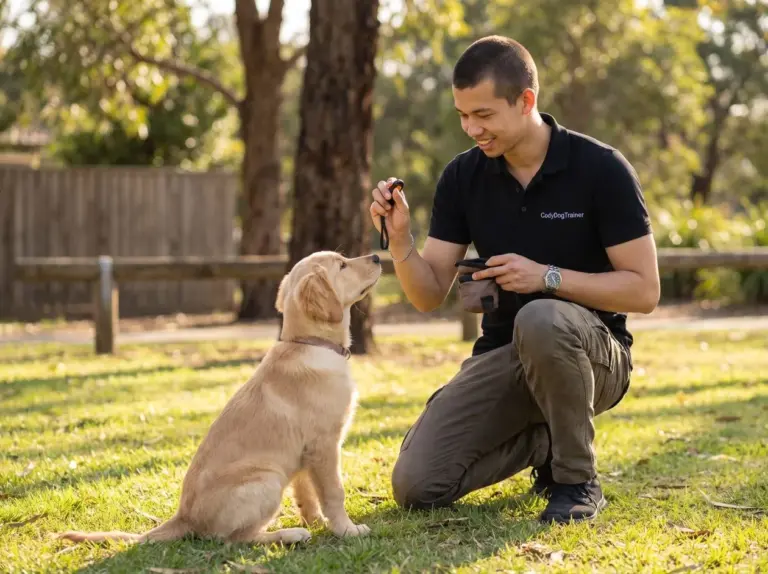
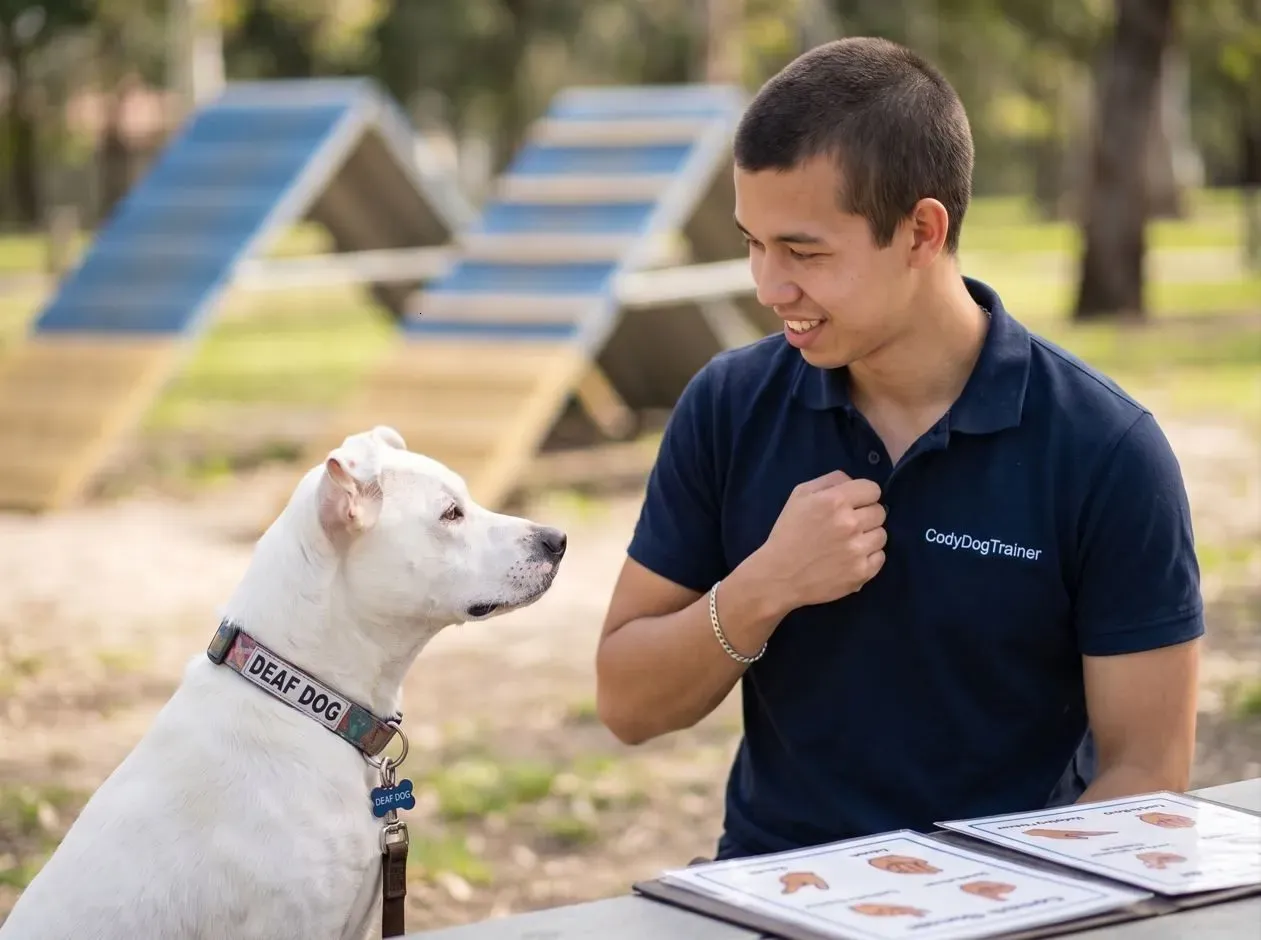
Owners must create a visual marker, similar to a clicker for hearing dogs. A common choice is a thumbs-up or an open palm held close to the chest. This visual marker should be charged by associating it with a reward, ensuring the dog learns to anticipate a treat upon seeing the signal.
Capturing And Luring Behaviors
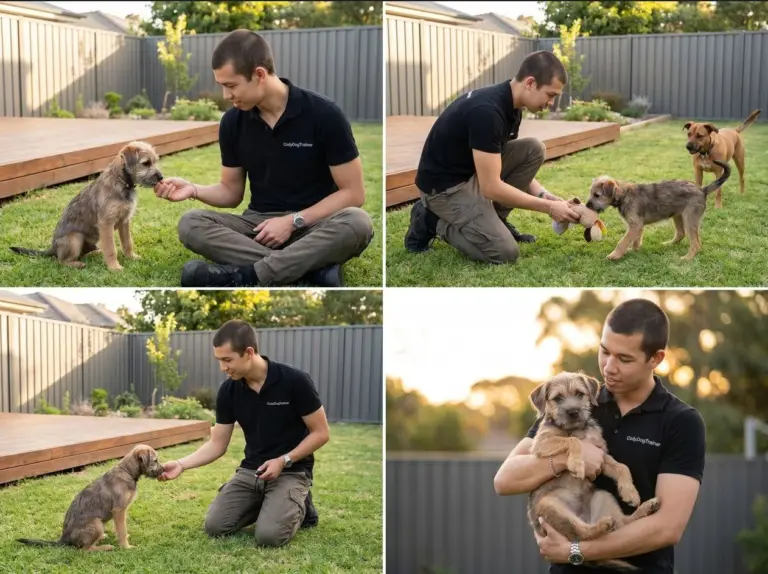
Capturing behaviors involves waiting for the dog to perform a desired action spontaneously and then immediately presenting the visual marker followed by a treat. Luring, on the other hand, requires guiding the dog into a position using treats while simultaneously using the hand signal. Both methods effectively reinforce the desired behaviors.
Building Attention And Engagement
One of the most significant challenges with deaf dogs is capturing their attention, particularly in distracting environments. Effective training focuses on building a strong visual connection that encourages the dog to check in with the owner regularly.
Creating An Automatic Check-In
Training should emphasize the importance of the dog regularly checking in with the owner. This can be achieved by rewarding the dog for looking at the handler with treats or praise. Over time, this behavior will become habitual, allowing for greater safety and control during walks or off-leash activities.
Using Environmental Cues
Environmental cues can help capture a deaf dog’s attention. Vibrations, such as stomping on the ground, can alert the dog to the owner’s presence. Additionally, using bright colors or reflective materials can enhance visibility, especially in low-light conditions.
Common Mistakes To Avoid
Training deaf dogs requires understanding specific challenges and avoiding common pitfalls. Mistakes can hinder progress and negatively impact the training experience.
Overly Subtle Signals
Many owners underestimate the need for large, clear signals. Subtle gestures may work in close proximity but become ineffective at a distance. It is essential to use exaggerated movements to ensure the dog can see and interpret the signals correctly.
Using Negative Signals
Using aggressive gestures or negative body language can cause a deaf dog to disengage. Owners should avoid any hand signals that may appear threatening, as this can lead to fear and decreased communication. Positive reinforcement and gentle gestures should be the focus.
Tools And Resources For Training
In addition to hand signals, various tools can enhance the training experience for deaf dogs. These tools can facilitate communication and reinforce training techniques effectively.
Vibrating Collars
Vibrating collars can serve as an additional communication tool. They provide a non-verbal alert to the dog, allowing for better control in situations where visual signals may not be sufficient. Owners should choose vibration-only collars to avoid causing distress to the dog.
High-Value Treats
Using high-value treats, such as freeze-dried liver or chicken, can significantly improve a dog’s focus during training sessions. These treats should be reserved for training to maintain their effectiveness and keep the dog engaged.
Frequently Asked Questions
Do I need to learn official American Sign Language (ASL) for my dog
No, while ASL provides a structured approach, dogs respond well to any unique and consistent gestures, whether they are ASL signs or created by the owner.
How do I wake up my deaf puppy without startling them into a bite reflex
Approaching a sleeping deaf dog with heavy footsteps or gently placing a hand in front of their nose can prevent startling them and allow for a gentle wake-up.
What do I use instead of a training clicker
A visual marker, such as a thumbs-up or an open palm, serves as a suitable replacement for a clicker by providing a clear, visual signal that precedes a reward.
How can I ensure my dog checks in with me during walks
Establishing a habit of rewarding the dog for looking back at the owner during walks can reinforce the behavior and encourage regular check-ins.
Can I use a flashlight to get my deaf dog’s attention
While flashlights can be useful, they should be used cautiously to avoid developing obsessive behaviors. A simple hand signal is generally more effective for capturing attention.
Conclusion
Teaching non-verbal hand signals to deaf dogs is a rewarding process that enhances communication and strengthens the bond between the dog and owner. By understanding the unique needs of deaf puppies and employing effective training techniques, owners can create a successful and fulfilling training experience. Establishing a clear visual language not only supports obedience but also fosters a safe and engaging environment for deaf dogs.