Impulse Control Training For High Energy Hunting Dog Breeds
Impulse Control Training For High Energy Hunting Dog Breeds
High energy hunting dog breeds, such as German Shorthaired Pointers, Vizslas, and Labrador Retrievers, often exhibit behaviors that can be challenging for owners to manage. These dogs, bred for stamina and focus, can easily become overwhelmed by their natural instincts, leading to impulsive actions that pose a risk to themselves and others. As a result, impulse control training is essential for these breeds, allowing them to channel their energy constructively while enhancing their obedience both at home and in public spaces.
This article will explore effective impulse control training techniques specifically designed for high-energy hunting breeds. By providing practical steps, examples, and actionable advice, owners can help their dogs transition from hyper-arousal to calm cooperation, ensuring a more harmonious living environment.
Understanding Impulse Control
The Nature of Impulse Control in Dogs
Impulse control refers to a dog’s ability to suppress immediate reactions in favor of more desirable behaviors. For high-energy hunting breeds, this ability can be particularly challenging due to their genetic predispositions. Research indicates that canine impulse control is context-specific, meaning a dog may behave well in familiar environments but struggle in new or distracting situations (Brucks et al., 2017).
Why High Energy Breeds Struggle with Impulse Control
High-energy hunting breeds are often driven by instincts related to chasing and retrieving. This drive can lead to behaviors such as lunging, barking, and even destructive actions when their impulses are not managed effectively. Owners frequently face the dilemma of how to provide an outlet for their dogs’ energy while teaching them to remain calm in various situations.
Essential Tools for Impulse Control Training
Flirt Pole: A Training Powerhouse
The flirt pole is an essential tool for impulse control training. It consists of a long pole with a lure attached, allowing dogs to chase and engage their prey drive in a controlled manner. This helps dogs learn to wait for permission before chasing, reinforcing impulse control during high-arousal situations.
When using a flirt pole, it is crucial to implement specific rules: the dog must sit and wait while the lure is presented, then be released to chase on command. This structured approach teaches them to manage their excitement effectively.
Long Lines for Outdoor Training
Long lines can be used to maintain control during outdoor training sessions, allowing dogs to explore their environment while still being under supervision. This tool provides a safe way to practice recall and other commands amidst distractions, bridging the gap between a controlled environment and real-world scenarios.
Interactive Toys and Puzzle Games
Incorporating interactive toys and puzzle games into training routines can also promote impulse control. These toys require dogs to think critically and work for rewards, redirecting their energy into problem-solving rather than impulsive behaviors. Additionally, scent-work kits can engage their natural instincts while promoting focus and self-control.
Establishing a Training Routine
Creating a Structured Environment
To effectively train impulse control, establishing a structured training environment is vital. This involves setting up specific training sessions that limit distractions and gradually introduce new elements. By starting in a quiet space and slowly adding distractions, owners can help their dogs learn to maintain focus despite external stimuli.
Using Positive Reinforcement
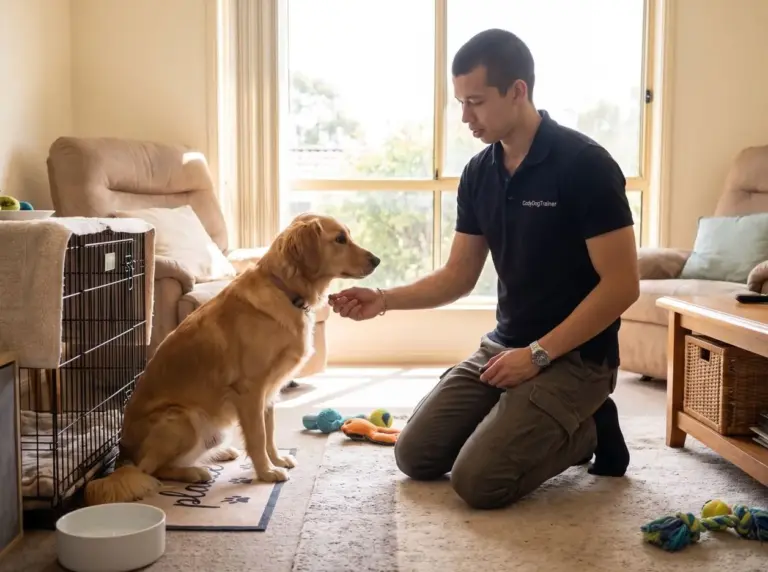
Positive reinforcement is crucial for impulse control training. Rewarding desired behaviors with treats, praise, or playtime encourages dogs to repeat those behaviors. For instance, when a dog demonstrates calm behavior, it should be rewarded immediately to reinforce the connection between impulse control and positive outcomes.
Setting Achievable Goals
Setting small, achievable goals during training sessions can help maintain motivation and progress. For example, start with short wait times and gradually increase the duration as the dog becomes more proficient. This incremental approach ensures that the dog experiences success and builds confidence over time.
Addressing Common Challenges
Overcoming Hyper-Arousal
Hyper-arousal can manifest as excessive barking, whining, or lunging. To address this, owners can implement calming techniques, such as teaching the dog to perform a “place” command on an elevated bed or mat. This position encourages relaxation and helps the dog learn to settle in stimulating environments.
Dealing with Frustration and Anxiety
Frustration can arise when dogs are denied access to high-value items or stimuli. It is important for owners to recognize signs of frustration, such as whining or pacing, and adjust the training approach accordingly. Rather than punishing these behaviors, owners should lower the difficulty level and gradually increase challenges as the dog learns to manage its impulses.
Consistency is Key
Consistency in training methods and commands is crucial for effective impulse control. All family members should use the same cues and standards to prevent confusion. This consistency helps dogs understand expectations and reinforces their training across different contexts.
Frequently Asked Questions
Why does my hunting dog perform perfectly inside but completely ignore me the second we cross the front doorway?
This behavior is common and relates to context-specific impulse control. Outdoor environments present numerous distractions that can overwhelm a dog’s ability to focus. Gradually introducing outdoor elements during training can help bridge this gap.
Can a flirt pole make my hunting dog’s prey drive worse?
No, when used correctly as a structured training exercise, a flirt pole can help channel a dog’s prey drive positively. It teaches them to listen to commands despite their excitement, allowing them to practice impulse control effectively.
My dog whines continuously when I make them wait or hold a place command. Should I punish them?
Punishing a dog for whining can escalate their stress and frustration. Instead, it is more effective to lower the difficulty level temporarily and gradually build up the challenge as the dog becomes more comfortable with the task.
What should I do if my dog shows destructive behavior when left alone?
Destructive behavior can stem from boredom or anxiety. Providing interactive toys, puzzle games, and regular exercise can help mitigate these behaviors. Additionally, crate training can create a safe space for the dog when left alone.
How long does it take to see results from impulse control training?
The timeline for seeing results varies based on the individual dog and the consistency of training. Many owners report noticeable improvements within weeks when implementing structured training sessions, but it can take several months for lasting behavior changes to occur.
Conclusion: Start Your Training Journey Today!
Impulse control training is essential for managing the energy and instincts of high-energy hunting dog breeds. By employing structured training techniques, utilizing the right tools, and maintaining consistency, owners can foster a calm and obedient companion. As dogs learn to control their impulses, they will become more reliable in various environments, enhancing the quality of life for both the dog and the owner.
For those struggling with impulse control in their hunting dogs, it is recommended to start implementing these techniques today. Consider investing in a flirt pole, establishing a structured routine, and focusing on positive reinforcement to guide your dog towards becoming the well-mannered companion you envision.