How to Build Confidence in Shy Rescue Puppies
How to Build Confidence in Shy Rescue Puppies: A Science-Backed Blueprint
Welcoming a shy rescue puppy into a home can be a rewarding yet challenging experience. These puppies often arrive with a history of stress, making it essential for owners to approach their new pet’s needs with empathy and understanding. Building confidence in these sensitive animals requires a tailored approach that considers their past experiences while promoting a safe environment for growth.
This guide serves as a comprehensive resource for owners looking to help their shy rescue puppies transition from fear to confidence. It provides a detailed, step-by-step protocol that is scientifically backed, focusing on techniques that prioritize the puppy’s emotional well-being without resorting to aversive methods or flooding.
Understanding and Preparation
Before embarking on the journey of building confidence in a shy puppy, it is crucial for owners to understand the concept of decompression. The first 72 hours after adoption are vital as they allow the puppy to adjust to their new environment. During this period, the puppy may exhibit signs of “shelter shock,” characterized by residual stress hormones like cortisol and adrenaline. This phase can be non-linear, often referred to as the 3-3-3 rule, where the puppy may go through three days of adjustment, three weeks of settling in, and three months to fully acclimate.
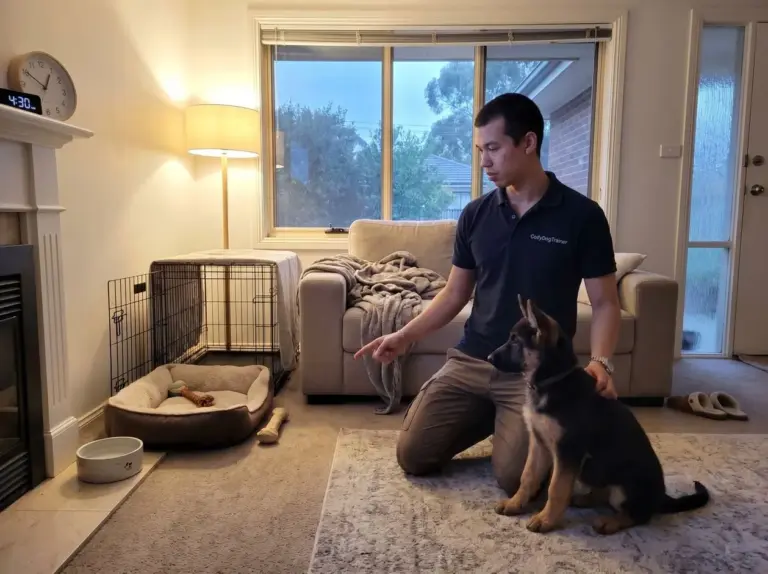
Owners should also adopt the principle of Passive Coexistence during this time. This involves sitting in the same room as the puppy without forcing interaction, allowing the puppy to approach on their terms. It is essential to implement the “No-Touch” rule, refraining from picking up or cornering the puppy. This approach fosters a sense of safety and security, enabling the puppy to explore their new space at their own pace.
Step-by-Step Instructions
1. Decompressing the Puppy
- Allow the puppy time to explore their new environment without pressure.
- Provide a safe space, such as a cozy bed or crate, where the puppy can retreat when feeling overwhelmed.
- Use soft, calming voices to create a peaceful atmosphere.
2. Deciphering Puppy Body Language
Understanding a shy puppy’s body language is crucial for preventing stress-induced meltdowns. Key indicators include:
- Whale Eye: The puppy shows the whites of their eyes, indicating anxiety.
- Pancaking: The puppy flattens their body against the ground as a sign of fear.
- Food Refusal: If the puppy refuses high-value treats, it suggests they are too stressed to learn.
3. Avoiding Flooding Techniques
Flooding can cause significant trauma in puppies. Instead, owners should utilize Desensitization and Counterconditioning (DS/CC) methods. This involves exposing the puppy to stressors gradually while pairing the experience with positive reinforcement, such as treats or praise.
4. Implementing the 3-Step Confidence Blueprint
- Map the Threshold Hierarchy: Identify the distance at which the puppy feels safe and calm.
- Play the “Look at That” (LAT) Game: Reward the puppy for observing triggers from a safe distance.
- The Yoga Mat Expansion Strategy: Use a designated mat as a safe zone, gradually moving closer to areas that may cause anxiety.
Common Mistakes
Several common mistakes can hinder progress in building a shy puppy’s confidence:
- Rushing Socialization: Owners may be tempted to introduce the puppy to too many new experiences too quickly, which can overwhelm them.
- Ignoring Body Language: Misreading signs of fear can lead to triggering a panic response.
- Using Aversive Methods: Techniques that rely on punishment can reinforce fear and anxiety, counteracting progress.
Troubleshooting Real-World Setbacks
It is essential for owners to prepare for non-linear progress. Trigger stacking can occur when multiple stressors create an overwhelming situation. For instance, if a loud noise joins other distractions, the puppy may reach their emotional breaking point.
In the event of a setback, the 5-Minute Reset technique can be employed. This involves stopping, turning around, dropping high-value treats, and retreating to a safe zone immediately.
FAQ
1. My puppy won’t eat treats outside. How do I train them?
Your puppy is likely over threshold. Owners should move to a quieter area, such as indoors with an open window, until the puppy’s heart rate drops and they regain their appetite.
2. Should I carry my scared puppy around to social places so they get used to it?
No. Carrying a puppy can remove their ability to choose whether to engage or retreat, which can lead to learned helplessness. Instead, use a parked car as a safe visual barrier.
3. How do I housebreak a puppy who is too terrified to go outside?
Creating a small, enclosed potty area just outside the door with an exercise pen can help minimize distractions and make the outdoor environment feel less overwhelming.
4. How can I tell if my puppy is making progress?
Progress can be observed through increased willingness to explore their environment, accepting treats from a distance, and displaying relaxed body language around triggers.
5. What should I do if my puppy has a meltdown during training sessions?
Immediately stop the training session. Allow the puppy to calm down by retreating to a safe space and providing comfort without forcing interaction.
Conclusion
Building confidence in a shy rescue puppy is a gradual process that requires patience and understanding. By following the outlined steps and recognizing the puppy’s needs, owners can foster a trusting relationship that promotes emotional well-being.
Every small step taken towards building confidence is a victory. Owners should celebrate these moments and remain committed to their puppy’s journey towards a happier, more confident life.